
“Are You Overpaying for Electricity? Here’s How to Know If Solar Makes Sense”
⚡ Are You Paying More for Electricity Than You Should?
Introduction
Most homeowners don’t realize how much their electricity is actually costing them over time.
It’s not just your monthly bill — it’s the constant increases, hidden costs, and lack of control.
👉 The real question isn’t just “Should I go solar?”
👉 It’s: “Am I overpaying right now?”
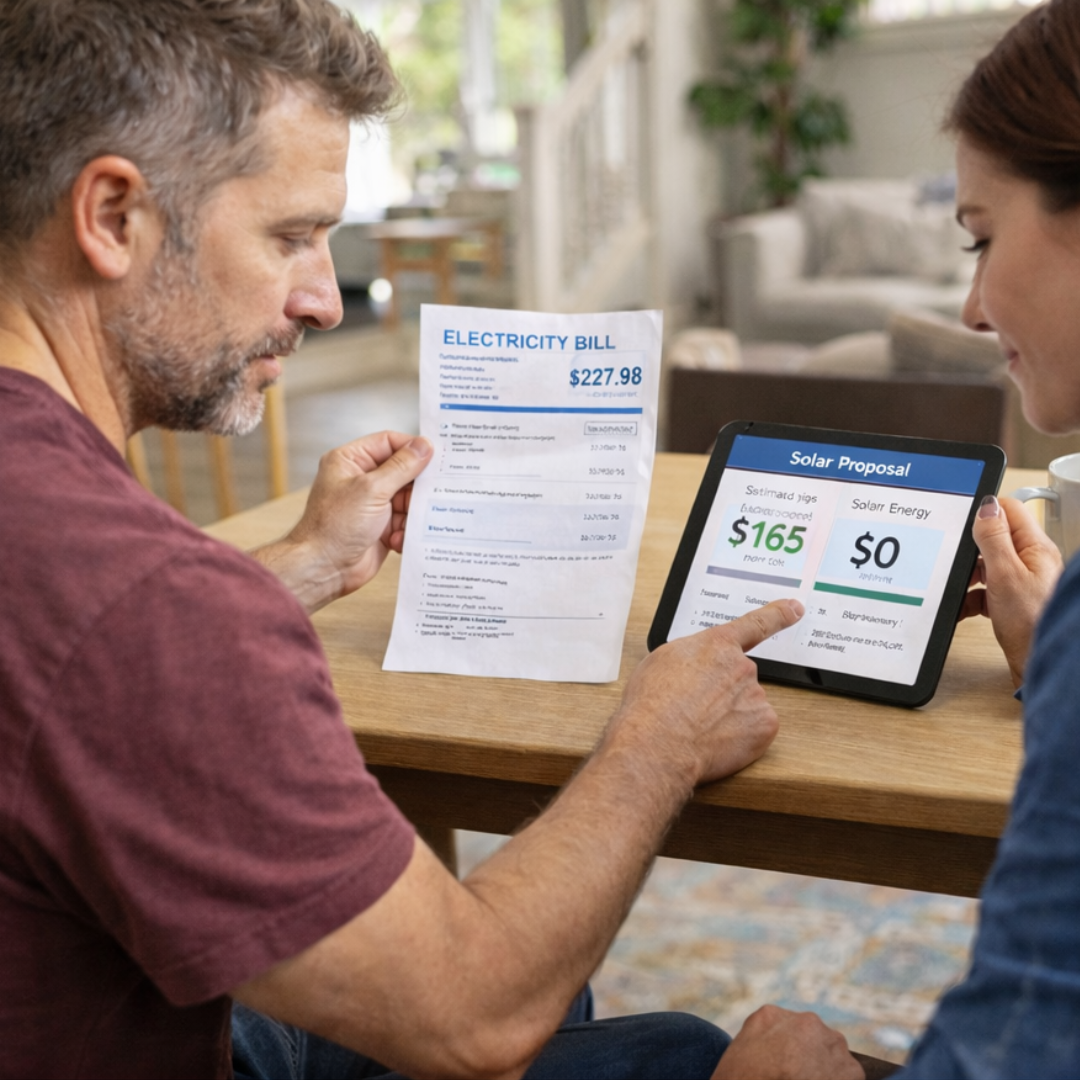
🌞 The Solar Adoption Program: A Different Way to Look at Energy
The Solar Adoption Program gives homeowners a way to rethink how they pay for electricity.
Instead of being locked into a utility company’s pricing, many homeowners are switching to a system where:
Payments are more predictable
Costs are often lower than their current bill
Upfront investment can be minimal or $0
👉 It’s less about buying solar — and more about replacing how you currently pay for energy.
💡 5 Signs You Might Be Overpaying for Electricity
Not everyone needs solar — but many homeowners don’t realize they’re in a situation where it makes sense.
Here are some clear signs:
1. Your Bill Keeps Increasing Every Year
If your electric bill has gone up multiple times in the past few years, you’re not alone.
Utility companies regularly raise rates — and you have no control over it.
👉 If your costs keep rising, it may be time to look at alternatives.
2. You’re Paying $150+ Per Month
Higher monthly bills often mean there’s more opportunity to save.
Homeowners with moderate to high usage are typically in the best position to benefit.
👉 The more you spend, the more room there is to reduce costs.
3. You Have No Control Over Your Energy Costs
With traditional utilities:
Prices change without warning
You can’t lock in rates
You’re fully dependent on the grid
👉 That lack of control is where most homeowners lose money over time.
4. You Plan to Stay in Your Home Long-Term
If you’re staying in your home for several years, your energy costs will continue to add up.
Over time, that can mean:
Thousands spent on electricity
No return on that money
Ongoing exposure to rate increases
👉 Long-term homeowners benefit the most from making a switch earlier.
5. You’ve Thought About Solar Before — But Assumed It Was Too Expensive
This is one of the biggest misconceptions.
Many homeowners still believe solar requires:
Large upfront payments
Complicated installation
Long payback periods
👉 But with newer programs and financing options, that’s no longer the case for many people.
👉 Find Out If You’re Overpaying (Free)
The easiest way to know for sure?
👉 Get a quick breakdown of your current costs vs. what solar could look like.

🏡 When Solar Actually Makes Sense
Solar isn’t for everyone — but for the right homeowner, it can be a smart financial move.
You’re more likely to benefit if you:
Own your home
Have a credit score of 650+
Have a roof with decent sunlight
Pay a moderate to high electric bill
👉 If that sounds like you, it’s worth taking a closer look.
🔍 What Happens When You Check Your Options?
We keep everything simple and transparent — no pressure, no confusion.
1. Compare Your Current Costs
We start by reviewing your electric bill.
This shows:
What you’re currently paying
How your usage breaks down
Where your money is going
👉 Most homeowners are surprised by what they find.
2. See If Your Home Is a Good Fit
We quickly evaluate your home’s setup.
We look at:
Roof condition
Sunlight exposure
Overall suitability
👉 This step determines if solar is even worth considering.
3. Run the Numbers
If it makes sense, we show you:
Estimated monthly solar payment
Comparison to your current bill
Potential long-term savings
👉 You’ll see clearly whether it benefits you or not.
4. Review Your Options
We walk you through:
Available financing options
System setup
What the process looks like
👉 Everything is explained in plain, simple terms.
5. Get Clear Answers (No Pressure)
You can ask anything — and decide at your own pace.
We’ll cover:
Costs
Timeline
What to expect
👉 No obligation — just information.
👉 Ready to See If You’re Overpaying?
You could be spending more than you need to — and not even realize it.
👉 Take a few minutes to check your numbers and see if switching makes sense.
